
What Is CFA Piling and when can it be used?
CFA piling, also known as Continuous Flight Auger piling, is a bored piling method used to create deep foundations for buildings and structures where traditional shallow foundations are not suitable.
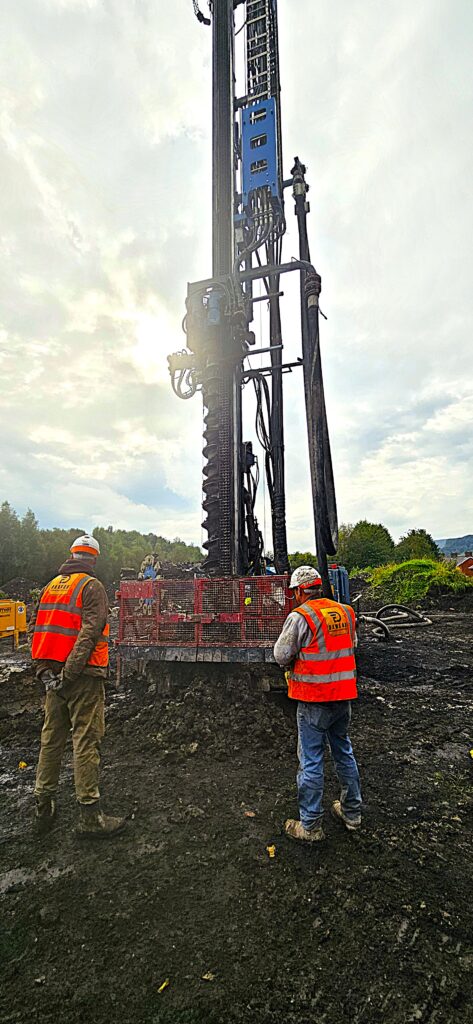
At a recent site in Wigan, Dawson Foundation Engineering installed CFA piles as part of the foundation solution. But what are CFA piles, how are they installed, and when is this method the right choice?
This guide explains how CFA piling works, the main benefits of the system, where it can be used, and the site conditions where an alternative piling method may be more appropriate.
What Is CFA Piling?
CFA stands for Continuous Flight Auger. A CFA pile is formed by drilling into the ground with a hollow-stem auger to the required depth. Concrete or grout is then pumped through the centre of the auger as it is slowly withdrawn from the ground.
This process leaves behind a continuous column of wet concrete. Once the pile has been formed, the required reinforcement is plunged into the concrete to complete the pile.
Because the pile is formed in one continuous operation, CFA piling can be an efficient and reliable method on suitable sites. It is commonly used for residential developments, commercial buildings, industrial projects and sites where low noise and low vibration are important.
For full technical details about pile sizes, capacities and installation, visit our Continuous Flight Auger Piles service page.
How Are CFA Piles Installed?
The CFA piling process usually follows these key stages:
- Positioning the piling rig: The rig is set up over the proposed pile location.
- Drilling to depth: A continuous flight auger is drilled into the ground to the design depth in a single stroke.
- Concrete placement: Concrete or grout is pumped through the hollow stem of the auger as the auger is withdrawn.
- Pile formation: The concrete fills the bore from the base upwards, forming a continuous pile.
- Reinforcement installation: The reinforcement cage is placed into the wet concrete.
- Quality control: The installation is monitored to help ensure the pile is formed correctly and to the required specification.
This method does not usually require temporary casing because the auger supports the surrounding ground during installation.
When Can CFA Piling Be Used?
CFA piling can be used across a wide range of ground conditions and project types. It is particularly suitable where piles need to be installed quickly with minimal noise and vibration.
Typical uses include:
- New residential developments
- Commercial and industrial buildings
- Urban construction sites
- Sites close to existing buildings or sensitive structures
- Projects where vibration needs to be reduced
- Foundations requiring good compressive, tensile or shear load performance
CFA piles can be suitable in many soil conditions, including stiff clays, loose sands, chalk and weak rock. However, suitability should always be confirmed through ground investigation, structural requirements and site-specific design.
Key Benefits of CFA Piling
Low Noise and Minimal Vibration
One of the main advantages of CFA piling is that it produces very little vibration compared with some driven piling systems. This makes it a strong option for sites close to neighbouring properties, roads, utilities or existing structures.
Fast Installation on Suitable Sites
Because the pile is formed in a single auger stroke, CFA piling can offer high production rates. This can help reduce programme time on open sites where the rig has enough space and headroom to operate efficiently.
Suitable for a Wide Range of Loads
CFA piles can be designed to support significant compressive loads, as well as tensile and shear forces where required. This makes the system suitable for a variety of building and structural foundation requirements.
No Temporary Casing Usually Required
The auger supports the ground during the drilling process, meaning temporary casing is not normally required. This can simplify the installation process on appropriate ground conditions.
Useful for Urban and Built-Up Areas
The low-vibration nature of CFA piling makes it well suited to projects in towns, cities and developed areas where the impact on surrounding properties needs to be carefully managed.
Limitations of CFA Piling
Although CFA piling is a highly effective method, it is not suitable for every site. The right piling solution depends on access, headroom, ground conditions, design loads and the presence of obstructions or rock.
Requires a Tall Piling Rig
CFA piles are installed in one continuous auger stroke. This means the piling rig needs sufficient working height and space. On sites with restricted access, limited headroom or internal working areas, Sectional Flight Auger Piles may be a more suitable alternative.
Creates Spoil
CFA piling removes soil from the ground and replaces it with concrete. This creates spoil, which must be managed and removed from site where required. On projects where reducing spoil is a key priority, another piling method may be worth considering.
May Not Be Suitable for Very Soft or Compressible Soils
In compressible soils such as peat, CFA piling may be less effective. Depending on the project requirements, a driven pile or another foundation solution may be more appropriate.
Cannot Penetrate Strong Rock
CFA piling is not designed to drill through strong rock. Where rockhead, boulders or difficult obstructions are present, Overburden Drill and Case Piles, also known as ODEX piles, may be a better option.
CFA Piling Compared with Other Piling Methods
The correct piling method should always be selected around the ground conditions, load requirements and practical site constraints.
| Piling Method | Best Suited To | Main Consideration |
|---|---|---|
| CFA Piling | Open sites requiring low vibration and efficient installation | Needs sufficient rig height and working space |
| Sectional Flight Auger Piles | Restricted-access sites where smaller plant may be needed | Can be slower than CFA on open sites |
| Bottom Driven Steel Cased Piles | Restricted access, low spoil and some internal piling projects | A driven method, so site sensitivity must be assessed |
| ODEX / Drill and Case Piles | Ground with obstructions, rock or difficult overburden | Often used where CFA cannot penetrate the founding material |
If access is limited, our Bottom Driven Steel Cased Piles or Sectional Flight Auger Piles may be more suitable. Where rock or difficult ground is present, our Overburden Drill and Case Piles service may be recommended.
Is CFA Piling Right for Your Project?
CFA piling can be a strong choice when the site has enough space for the rig, the ground conditions are suitable, and the project requires a low-vibration foundation solution.
It is often considered where shallow foundations are not suitable due to poor ground, high loads, nearby structures or the need to transfer loads to deeper, more competent strata.
However, no piling method should be selected in isolation. The most suitable solution depends on ground investigation data, structural loads, access constraints, headroom, programme requirements and the surrounding environment.
Speak to Dawson Foundation Engineering About CFA Piling
Dawson Foundation Engineering designs and installs a range of piling and foundation solutions, including CFA piling, SFA piling, bottom driven steel cased piles, screw piles and overburden drill and case piles.
If you are unsure whether CFA piling is right for your site, our team can review your project requirements and advise on the most suitable foundation approach.
Contact Dawson Foundation Engineering to discuss your project or request a quote.
Frequently Asked Questions About CFA Piling
CFA stands for Continuous Flight Auger. It refers to a piling method where a continuous auger drills into the ground and concrete is pumped through the hollow stem as the auger is withdrawn.
CFA piling is generally a low-noise and low-vibration method compared with many driven piling techniques. This makes it suitable for many urban and sensitive sites.
Yes. CFA piling removes soil from the ground as the auger drills, so spoil is produced and may need to be removed from site.
CFA piling usually requires a tall piling rig and sufficient working space. On restricted-access or low-headroom sites, sectional flight auger piles or bottom driven steel cased piles may be more suitable.
CFA piling can be suitable for a range of ground conditions including stiff clays, sands, chalk and weak rock. Strong rock, obstructions or highly compressible soils may require another piling method.
The best piling method depends on the ground conditions, structural loads, access, headroom and project requirements. A piling contractor or engineer should assess the site before recommending a foundation solution.

