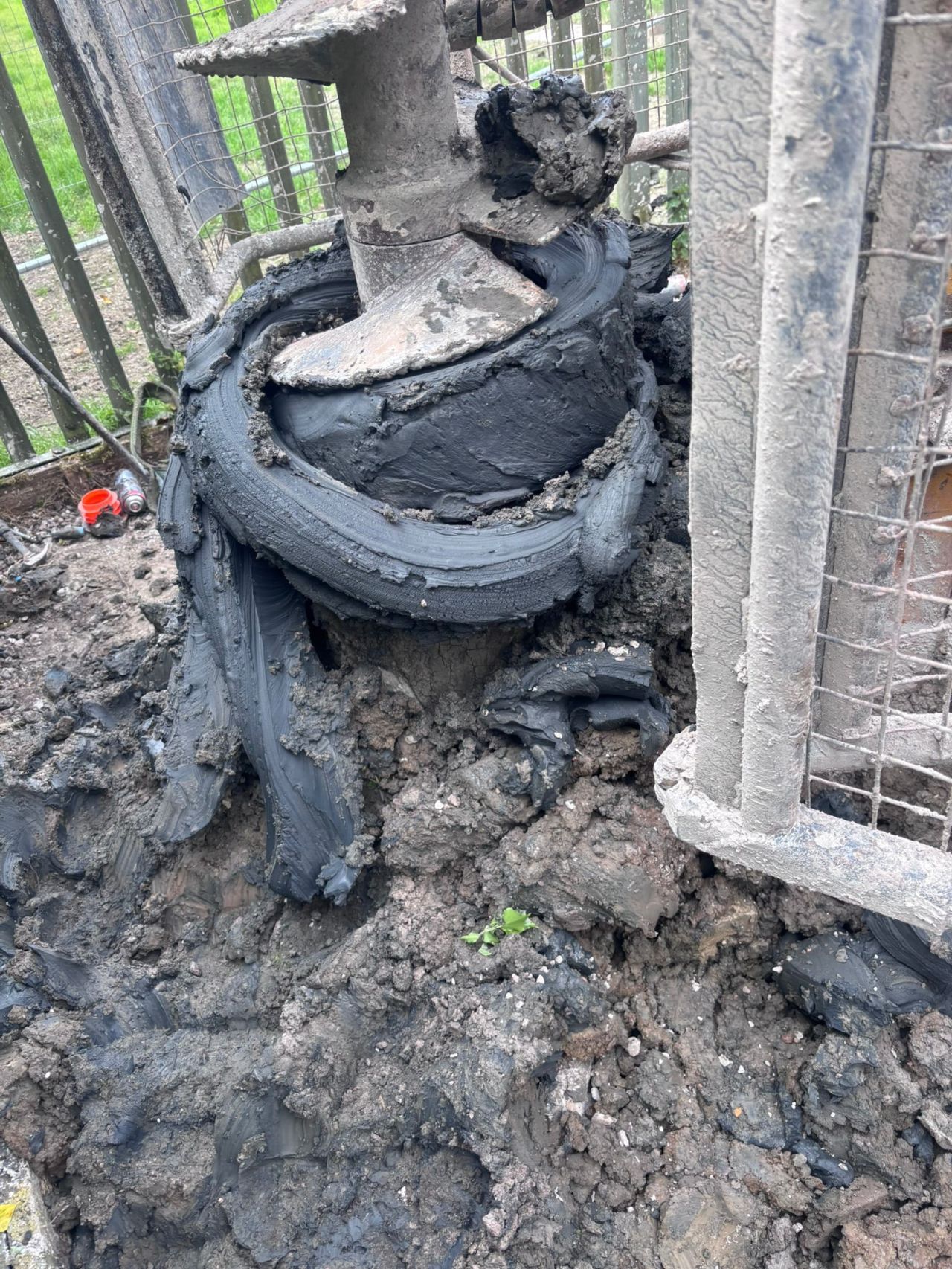
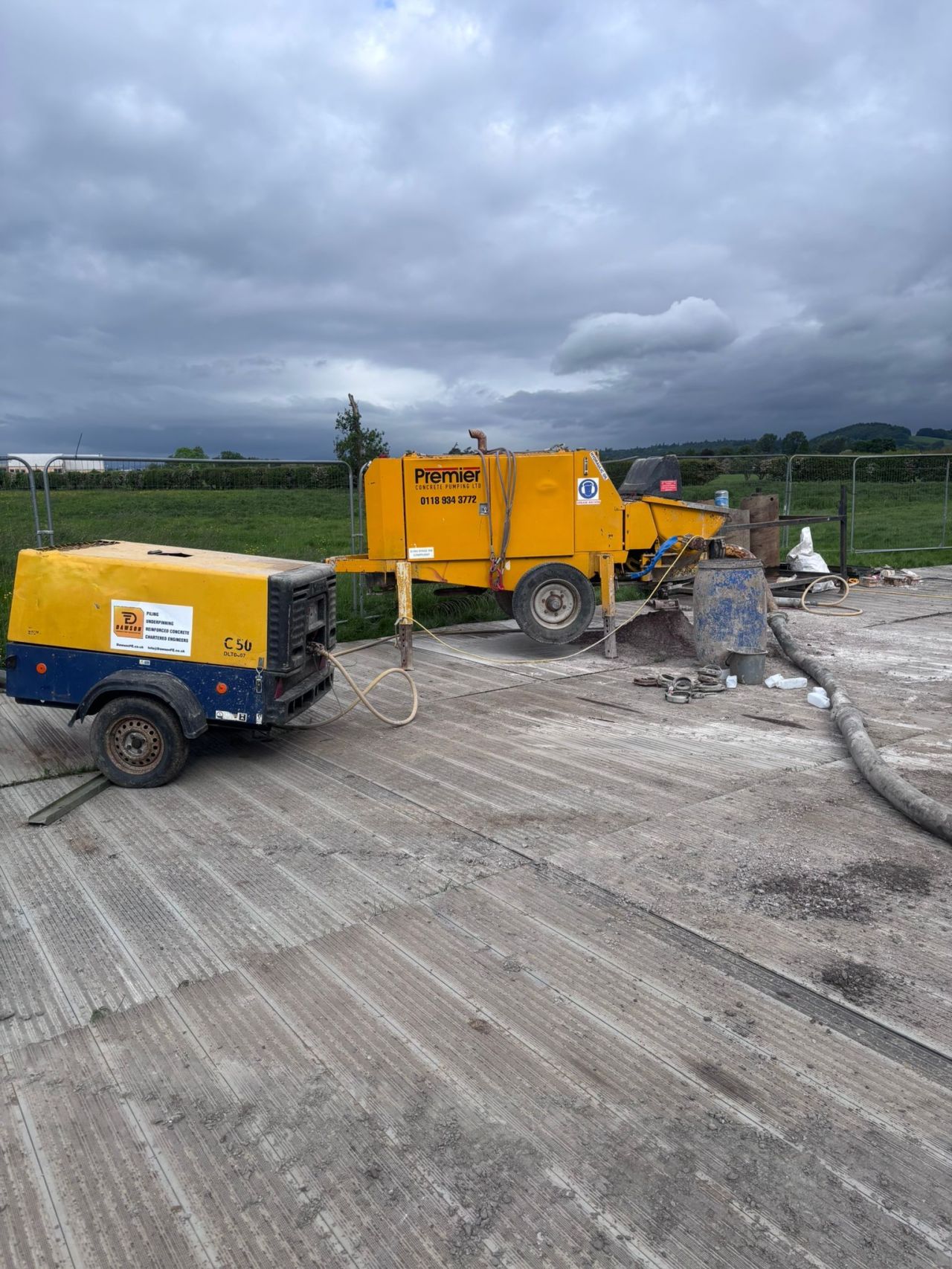
Cased Auger Piling Through Soft Alluvial Deposits in Scotland
Dawson Foundation Engineering recently completed a specialist cased auger piling project in Scotland, installing 450mm diameter piles through soft alluvial deposits before founding into dense gravels.
The project required a piling technique capable of maintaining bore stability through challenging upper ground conditions while allowing the piles to be taken down to a competent bearing stratum. To achieve this, the team installed each pile using 508mm temporary casing, progressing the casing to 8.0m before boring to a final depth of 11.0m.
This type of work demonstrates the importance of selecting the correct piling method for the ground conditions on site. Where soft or unstable deposits are present, temporary casing can provide support during installation and help ensure the pile is formed correctly.
Project Overview
- Location: Scotland
- Pile type: Cased auger piles
- Pile diameter: 450mm
- Temporary casing: 508mm diameter
- Cased depth: 8.0m
- Final pile depth: 11.0m
- Founding stratum: Dense gravels
- Ground conditions: Soft alluvial deposits over dense granular material
The Challenge
The key challenge on this project was the presence of soft alluvial deposits in the upper ground. These types of deposits can present stability issues during bored piling operations, particularly where the bore needs to remain open long enough for concrete placement and reinforcement installation.
The design required the piles to pass through these weaker deposits and continue to a final depth of 11.0m, where they founded into dense gravels. A temporary casing system was therefore used to support the bore through the softer ground before the piles were completed at depth.
The Piling Solution
The Dawson FE team installed 450mm diameter piles using 508mm temporary casing. The casing was advanced to 8.0m through the soft alluvial deposits, helping to maintain the integrity of the bore during installation.
Once the casing had been installed to the required depth, the piles were bored on to a final depth of 11.0m, founding into dense gravels. Concrete was then placed, followed by the installation of full-length reinforcement cages. The temporary casing was withdrawn after the pile had been formed.
This method allowed the team to manage the difficult upper ground conditions while still achieving the required founding depth and structural performance.
Installation Sequence
- The piling position was set out and prepared for installation.
- 508mm temporary casing was installed through the soft alluvial deposits.
- The casing was advanced to a depth of 8.0m.
- The pile was then bored to a final depth of 11.0m.
- Concrete was placed to form the pile shaft.
- A full-length reinforcement cage was plunged into the concrete.
- The temporary casing was withdrawn to complete the pile.
Project Outcome
The works were completed successfully, with the piles founded into dense gravels as required. The use of temporary casing allowed the team to control the installation through soft alluvial deposits and deliver a robust piled foundation solution for the project.
Although cased auger piling is not a method Dawson FE undertakes on every project, this scheme highlights the company’s ability to adapt the piling technique to suit the site conditions, ground profile and design requirements.
Specialist Piling for Challenging Ground Conditions
Dawson Foundation Engineering provides a range of piling solutions for sites with restricted access, variable ground conditions and specific structural requirements. Our team can advise on the most suitable approach based on the ground investigation, load requirements and site constraints.
For related piling methods, view our piling services, sectional flight auger piles and continuous flight auger piles pages.
To discuss a piling project in Scotland or elsewhere across the UK, contact Dawson FE.