
Screw Piles for House Extensions
Building a house extension often begins with one important question: what type of foundation will be required?
In many cases, traditional strip foundations can provide a suitable solution. However, where ground conditions, structural loading or site constraints make conventional foundations impractical, a piled foundation may be required.
One option that may be considered is screw piling.
Screw piles are steel foundation elements fitted with helical plates. They are mechanically rotated into the ground to create a load-bearing foundation suitable for a range of residential projects.
The correct solution will depend on the ground conditions, proposed extension, structural requirements and access available for the installation equipment.
For a detailed introduction to the system, read What Is Screw Piling and Where Is It Used?
Further technical information is available on our Screw Piles service page.
Why Might a House Extension Need Piling?
Not every house extension requires a piled foundation. In many cases, conventional strip foundations will provide a suitable solution.
However, piling may be considered where:
- Ground conditions are unsuitable for traditional foundations
- Suitable load-bearing ground is located at greater depth
- The structural loads require deeper foundation support
- Restricted access or limited working space influences the foundation design
- Ground investigation data identifies specific geotechnical requirements
- The proposed extension is close to existing buildings, trees or other site constraints
The most appropriate foundation method must be determined from the ground conditions, structural design and practical requirements of the individual project.
Understanding what lies beneath the site is therefore essential before any foundation system is specified. Read more about why site investigation is important for pile design.
When Can Screw Piles Be Suitable?
Screw piles may be considered for house extensions where the ground conditions, structural requirements and site constraints allow.
They can be particularly useful on projects where:
- Site access is limited
- Working space is restricted
- Excavation needs to be minimised
- Low noise and minimal vibration are important
- A piled foundation is required in place of traditional strip foundations
- The supported structure can be connected directly to the screw piles using a suitable engineered detail
Screw piles can be installed using handheld equipment or compact machine-mounted systems, depending on the pile specification, access available and installation torque required.
Every project must still be assessed individually. Suitability depends on the ground investigation findings, structural design of the extension and practical conditions on site.
For a fuller overview of the benefits and limitations, read our guide to the advantages and disadvantages of screw piling.
Are Screw Piles Worth the Cost?
Screw piles can provide a cost-effective foundation solution where the ground conditions, structural requirements and site access are suitable.
Although the initial cost may be higher than conventional strip foundations, screw piling can reduce excavation, spoil removal and installation time. In some cases, the supported structure can also be connected to the piles without waiting for concrete within the pile to cure.
The most appropriate foundation system should always be selected on engineering suitability rather than price alone. A correctly designed piled foundation can help avoid more costly structural problems later in the project.
For further information, read our guide to screw pile costs in the UK.
Additional Costs to Consider
The screw piles themselves may only form part of the overall foundation package. Other costs may include:
- Ground investigation
- Structural and foundation design
- Ground beams, pile caps or connection details
- Site preparation and access works
- Working area or platform preparation
- Excavation and spoil removal where required
The final cost will depend on the foundation design and the amount of associated work required around the screw piles.
For more detail, read our guides to screw pile costs in the UK and what piling costs.
Restricted Access Extensions
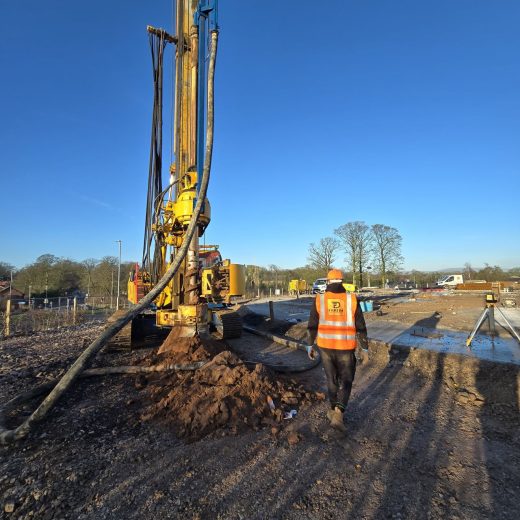
One of the most common challenges on residential extension projects is restricted access.
Rear extensions, side extensions and developments within established residential areas often have narrow access routes, limited working space or overhead restrictions that prevent larger construction equipment from reaching the proposed foundation area.
Screw piles can be suitable for some restricted-access projects because they may be installed using handheld equipment or compact machine-mounted systems, depending on the pile specification and the installation torque required.
However, access must still be assessed carefully. The installation team will need sufficient space to transport the pile sections, operate the equipment, connect extensions and complete the work safely.
Where screw piles are not appropriate, another compact piling method may provide a more suitable solution.
Learn more in our guide to restricted access piling.
How Do Screw Piles Compare to Mini Piling?
Both screw piles and mini piling can be used for residential extension projects, depending on the ground conditions, structural requirements and practical constraints of the site.
Screw piling is a specific foundation method using steel shafts fitted with helical plates. Mini piling is a broader term that can include a range of driven, bored, drilled, augered or screwed piling systems installed using compact equipment.
The most appropriate solution will depend on factors including:
- Ground conditions
- Structural loads
- Site access and working space
- Headroom restrictions
- Noise and vibration considerations
- The required foundation connection
- Project timescales and objectives
In some cases, screw piles may provide a fast and low-disruption solution. On other sites, a different mini-piling method may be more suitable for the ground conditions or required capacity.
Compare the options in more detail in our guide to screw piles vs mini piling.
Further information is also available on our Mini Piling service page.
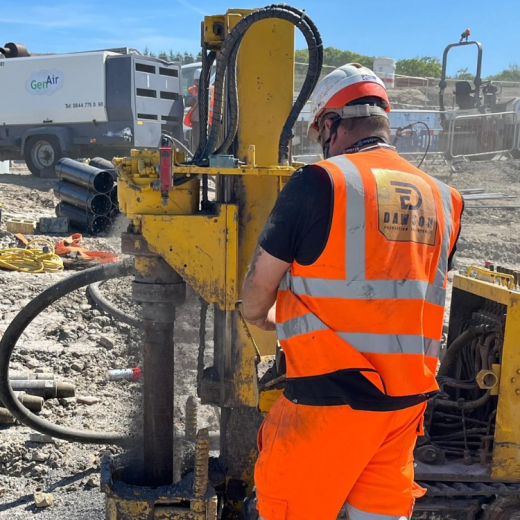
What Factors Affect Design?
The design of any piled foundation system depends on a number of project-specific factors.
For screw piles used on a house extension, these typically include:
- Ground investigation findings
- The strength and consistency of the soil
- The depth of suitable bearing material
- The size, layout and construction of the extension
- Structural load requirements
- The required pile diameter, helix arrangement and installation depth
- The target installation torque
- Site access and working conditions
- The connection between the screw piles and the supported structure
The pile specification cannot be selected using a standard depth or size for every extension. It must be designed around the ground conditions and the loads imposed by the proposed structure.
This is why a site-specific engineering assessment is required before a screw-piling solution can be recommended.
Read more about why site investigation is important for pile design and how screw pile depth is determined.
Working Platform Considerations
Safe screw-pile installation requires suitable working conditions for the selected equipment.
Depending on the site layout, ground conditions and installation method, preparation may be needed to create a stable working area for handheld equipment, compact machinery or an excavator-mounted hydraulic drive system.
The working area must provide sufficient space for the installation team to:
- Position and operate the equipment safely
- Transport and store pile sections
- Connect additional sections where required
- Monitor installation torque and progress
- Complete the connection to the supported structure
On some projects, a formal piling platform may not be required. However, the ground must still be suitable for the equipment and construction activities taking place.
Any access work, ground improvement or platform preparation should be identified before installation, as it may affect the programme and overall project cost.
Learn more in our guide: What Is a Working Platform and Why Is It Required?
Discuss Your House Extension Project
Screw piles can provide an efficient foundation solution for some house extensions, particularly where access is restricted, excavation needs to be reduced or conventional foundations are unsuitable.
However, every project must be assessed individually using the ground conditions, structural requirements and practical constraints of the site.
At Dawson Foundation Engineering, we provide free site visits and no-obligation quotations for residential piling projects throughout the UK.
To discuss your extension, call 0333 224 5196 or send us an enquiry.